Our Directorates & Sections - That drive MEDS operations and service delivery.

CEO’s Office
The CEO’s Office provides strategic leadership, policy direction, and operational oversight for the organization. The office coordinates key administrative and support functions through specialized sections including Human Resources & Administration, ICT, Legal & Compliance, and the Kisumu Branch to ensure efficient service delivery and organizational excellence.
Sections under CEO’s Office.
1. Human Resources & Administration (HR&A)
Manages recruitment, staff development, performance management, employee relations, and general administrative services to ensure a motivated and efficient workforce.
2. Information and Communication Technology (ICT)
Provides technology solutions, system management, and digital infrastructure to support efficient organizational operations.
3. Legal & Compliance
Ensures the organization operates within the law, manages legal risks, and upholds regulatory compliance.
4. Kisumu Branch
Implements organizational strategies and service delivery at the regional level, ensuring alignment with central office policies and local operational effectiveness.

Supply Chain & Logistics Department
The Supply Chain & Logistics Department is responsible for the efficient acquisition, storage, distribution, and management of organizational resources and assets. Through its specialized sections, the department ensures timely procurement, effective inventory management, secure warehousing, and reliable logistics operations that support seamless organizational service delivery.
1. Procurement
Manages the acquisition of goods and services, ensuring cost-effectiveness, quality, and compliance with procurement policies.
2. Inventory Management
Oversees stock levels, tracking, and utilization to prevent shortages or excess, ensuring resources are available when needed.
3. Warehousing & Logistics
Ensures safe, organized, and efficient storage of assets and supplies and Coordinates the timely movement and delivery of resources to all stakeholders.

Commercial Services Department
The Commercial Services Department is responsible for promoting the organization’s services, strengthening client relationships, and enhancing corporate visibility through strategic marketing, customer engagement, and effective communication initiatives. The department supports organizational growth by fostering strong stakeholder relations and maintaining a positive public image.
1. Marketing
Develops and implements strategies to promote the organization’s services and enhance brand awareness.
2. Client Relations
Builds and maintains strong relationships with clients to ensure satisfaction, loyalty, and service quality.
3. Public Relations & Communication
Manages the organization’s image, media relations, and internal and external communication to maintain a positive public perception.
4. Health Systems Strengthening (HSS)
Supports initiatives that improve health service delivery, policy implementation, and system efficiency in alignment with organizational goals.
Quality Services
Quality Services Directorate
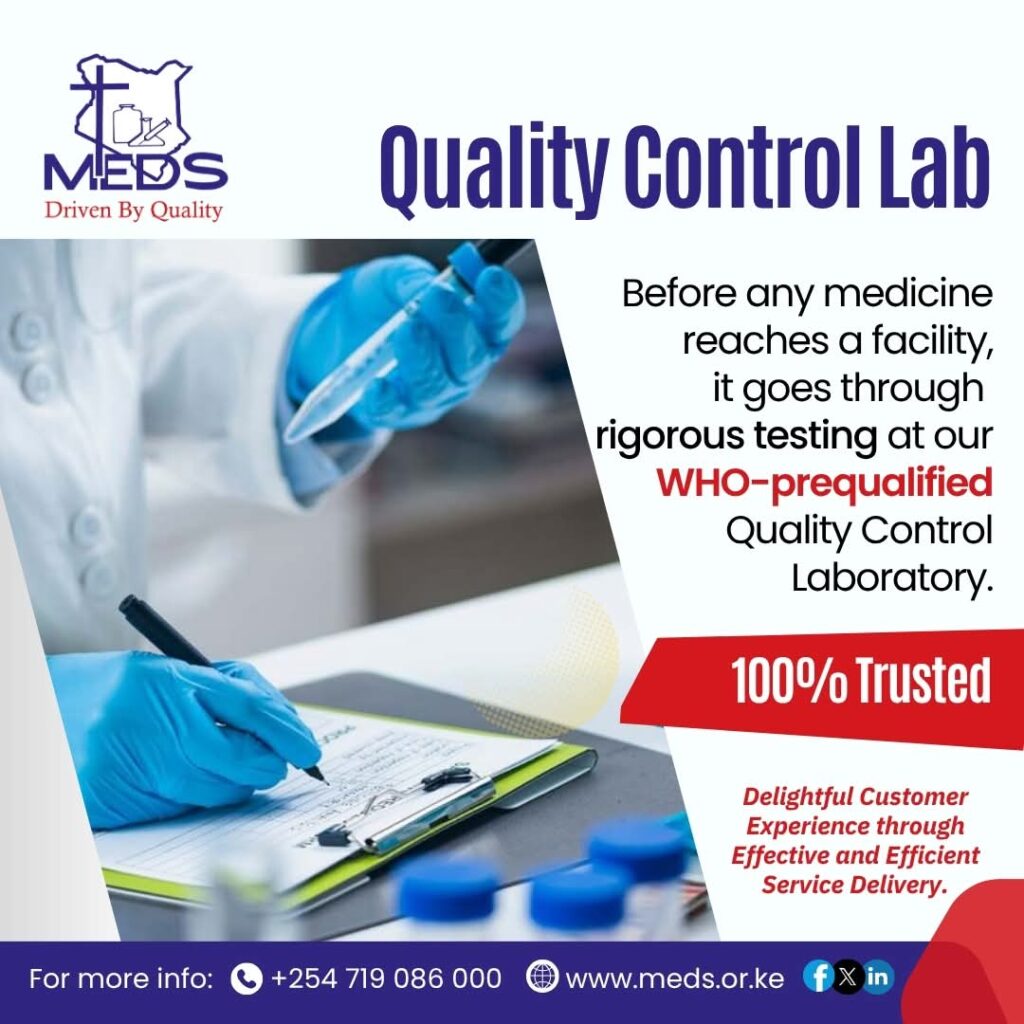
Ensures that MEDS outputs meet established standards and regulatory requirements through systematic quality monitoring, evaluation, and improvement initiatives. The directorate promotes excellence in service delivery and laboratory operations.
1. Quality Assurance
Monitors, evaluates, and improves organizational processes and services to maintain compliance with standards and enhance performance.
2. Laboratories
a) Microbiology Laboratory
Conducts microbiological testing and analysis to support accurate diagnosis, research, and service quality.
b) Biochemistry Laboratory
Performs biochemical analyses to support clinical diagnostics, research, and health program monitoring.
Finance & Investments
Oversees the organization’s financial management, investment strategies, and resource allocation to ensure fiscal responsibility, sustainability, and growth. The directorate supports decision-making through accurate financial reporting and effective financial controls.
1. Finance & Accounting
Manages budgeting, accounting, financial reporting, and auditing to ensure transparency, accuracy, and compliance with regulatory requirements.
2. Credit Control
Monitors and manages receivables, ensuring timely collection of payments and minimizing financial risks to the organization.
Internal Audit
Provides independent, objective assurance and advisory services to improve the organization’s operations, risk management, and governance. The directorate ensures compliance, accountability, and operational efficiency across all departments.
Audit & Assurance
Conducts audits of financial and operational processes to ensure compliance with policies, regulations, and best practices.
Risk Management & Advisory
Identifies, assesses, and mitigates organizational risks while providing guidance on improving internal controls and governance frameworks.